
Diesel Relief Announcements: What They Mean for Long Beach Drayage Costs
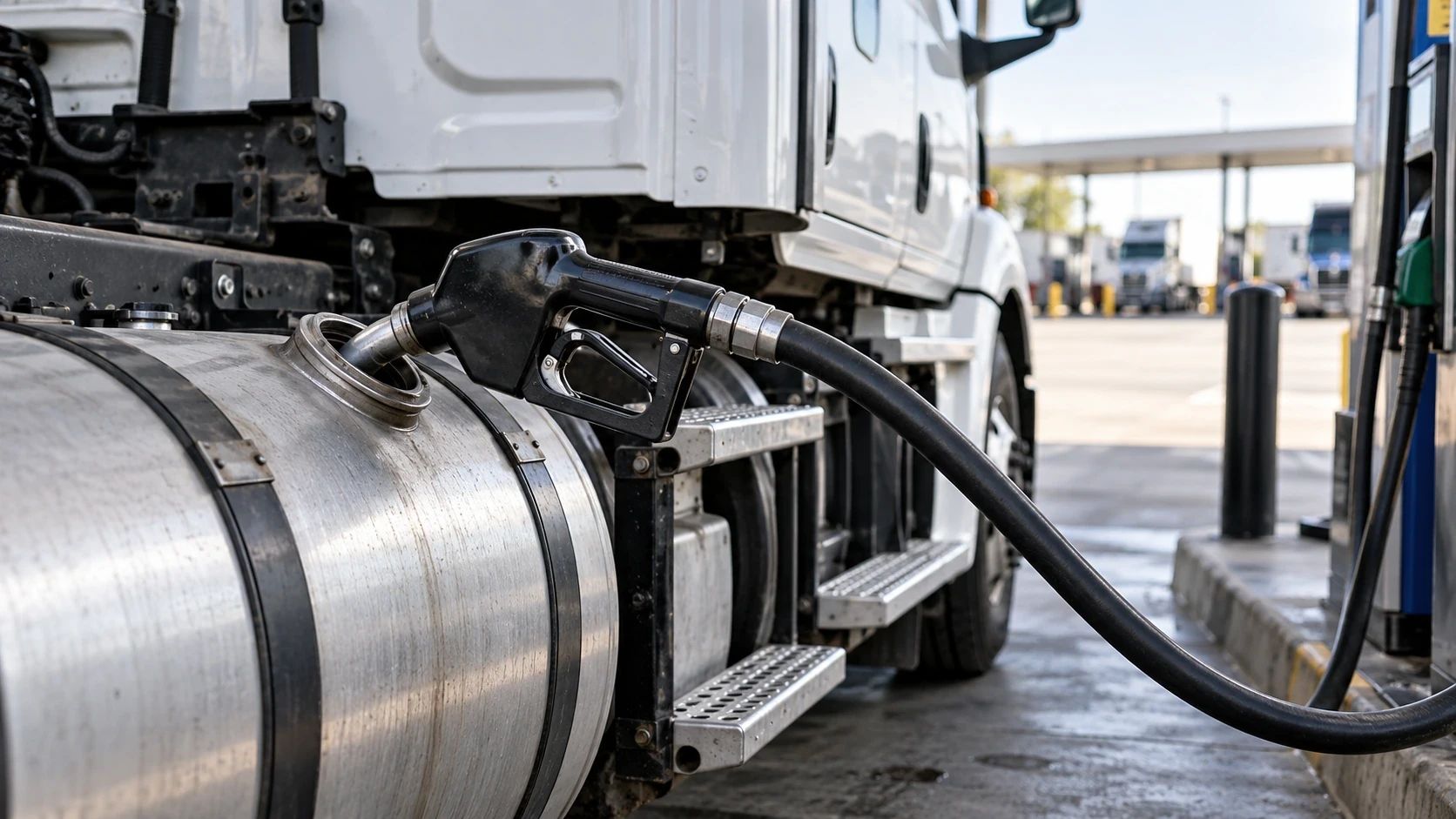
AI-generated illustration.
The Short Answer
Recent federal announcements aim to ease diesel costs, but they do not guarantee a $100 rebate per fill-up or an immediate reduction in California drayage rates. Buyers should confirm current fuel-surcharge terms and quote validity when arranging container transportation.
Why This Is Circulating Now
In early October 2026, the White House announced a set of actions described as diesel affordability measures. Social media and industry channels quickly circulated a claim that truckers would receive a "$100 savings per fill-up." That figure comes from the administration's own fact sheet, but the mechanics behind it are more limited than the headline suggests.
For freight forwarders, importers, and businesses arranging Port of Long Beach container transportation, the practical question is whether these announcements translate into lower drayage costs in the near term. The short answer is: not automatically, and not immediately.
What the October 5 Executive Order Actually Directs
On October 5, 2026, President Trump signed an executive order titled "Emergency Tax Relief on Diesel Fuel." The order directs certain federal tax-payment deferrals and penalty relief involving highway use of dyed diesel fuel during the period of October 5 through December 31, 2026.
This is an executive order — a directive from the President to federal agencies — not a bill passed by Congress. It does not create a new tax credit or permanently eliminate a fuel tax. The order instructs relevant agencies to defer certain tax payments and waive associated penalties for qualifying uses of dyed diesel during the specified window.
Red dye identifies diesel designated for certain tax-exempt uses; it does not by itself establish a different fuel grade. Highway use is ordinarily restricted. The October 5 order directs temporary federal penalty relief and conditional tax-payment deferrals, but carriers must check current federal guidance and applicable California requirements before relying on that relief.
The executive order directs agencies to act, but eligibility conditions, payment deadlines, and procedural requirements are established through Treasury and IRS guidance. Carriers and owner-operators should verify current guidance directly with their tax advisors or through official Treasury and IRS publications before relying on any deferral.
Why "$100 Per Fill-Up" Is Not a Guaranteed Rebate
The White House fact sheet attributes the $100 savings figure to the administration. It is a projected or illustrative estimate, not an automatic credit applied to every diesel purchase.
A tax deferral postpones payment; it does not itself forgive the tax. The order directs Treasury to explore ways to eliminate deferred liabilities, including legislation. October 5–December 31, 2026 is the period of tax liabilities and highway uses addressed by the order—not necessarily the deadline for paying deferred taxes. Applicable payment deadlines and conditions must be checked in Treasury and IRS guidance.
Whether any specific carrier or owner-operator sees a cost reduction — and whether that reduction flows through to shipper rates — depends on the carrier's fuel purchasing arrangements, applicable surcharge agreements, and the terms of any existing transportation contracts.
The Diesel Supply Announcements and What Remains Uncertain
Alongside the executive order, the White House announced measures intended to increase diesel supply. The fact sheet states that an agreement with Europe would release 100 million barrels of refined diesel from strategic reserves over four months. This is an attributed supply announcement, not confirmation that the United States purchased the entire announced volume or that fuel has reached California pumps.
California operates under its own fuel tax and regulatory framework. The California Department of Tax and Fee Administration (CDTFA) administers the state's diesel fuel tax separately from federal rules. The federal announcement alone does not establish a California tax exemption or authorization to use dyed diesel on California highways. Carriers should check current CDTFA requirements alongside federal implementing guidance.
What This Means for California Drayage Customers
The following reflects analysis of the available information, not a government promise or a guarantee of any specific outcome.
Port of Long Beach drayage rates are influenced by fuel costs, but fuel is one component among several — driver wages, chassis fees, terminal congestion, and equipment availability all factor into pricing. The announcement does not establish an across-the-board price reduction for ordinary clear diesel purchases, and it does not automatically change the fuel surcharges built into existing transportation agreements.
If diesel supply increases and pump prices fall in California over the coming weeks, carriers may see lower operating costs. Whether those savings are passed through to shippers depends on individual carrier pricing decisions, contract terms, and the timing of any rate adjustments. There is no mechanism in the executive order that requires carriers to reduce rates.
For current ITZON TRANSPORT pricing and applicable fuel-surcharge terms, request a quote directly.
Questions to Ask When Comparing Transportation Quotations
When arranging Port of Long Beach container transportation in the current environment, the following questions are worth asking of any carrier or broker:
- —Does the quoted rate include a fuel surcharge? If so, how is it calculated, and is it fixed for the duration of the quote or subject to adjustment?
- —How long is the quote valid? Fuel and operating costs can shift between the time a quote is issued and the time a container is ready for pickup.
- —Has the carrier adjusted rates in response to the October 2026 announcements? If a carrier claims immediate savings, ask for specifics about which cost component changed and when.
- —What are the terms for rate changes on recurring shipments? For importers with ongoing volume, understanding how and when rates can be adjusted is more useful than a one-time promotional figure.
Sources
- Executive Order: Emergency Tax Relief on Diesel Fuel — White House, October 5, 2026.
- Fact Sheet: President Donald J. Trump Promotes Diesel Affordability — White House, October 2026.
- Diesel Fuel Industry Topics — California Department of Tax and Fee Administration (CDTFA).
Ready to Move a Container?
Get a quote for Port of Long Beach drayage, Southern California delivery, or export container transportation.