
Export Container Drayage Process: From Empty Pickup to Loaded Port Return
An export container transportation move works differently from an import move. Instead of picking up a loaded container at the terminal, the trucking company retrieves an empty container, delivers it to the shipper for loading, and returns the loaded container to the port. This guide explains each step and what information is needed to coordinate the move.
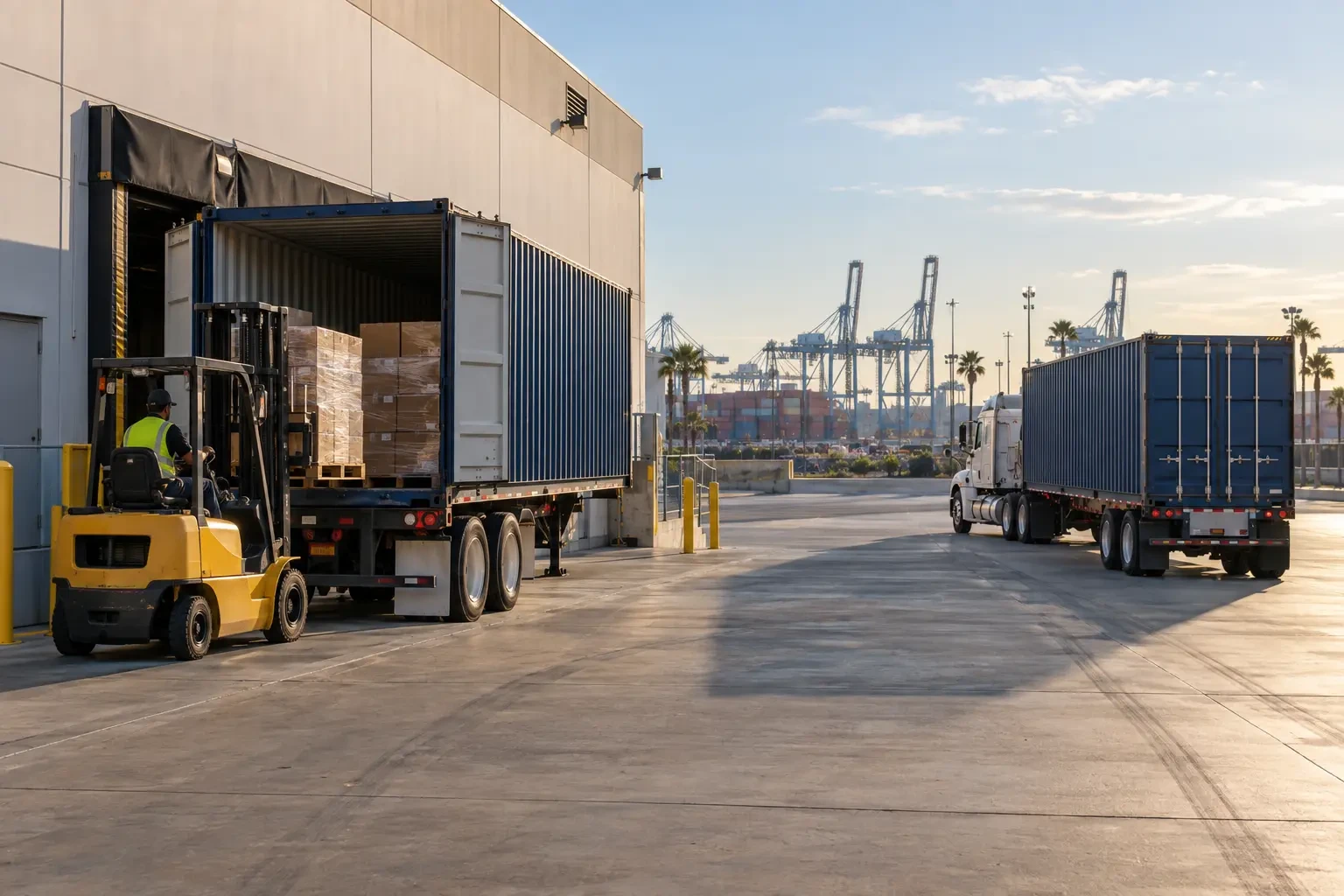
The short answer
Export container transportation generally begins with the ocean-carrier booking and empty-release instructions. The trucking company retrieves the empty container from the designated pickup location, delivers it to the shipper or loading facility, and returns the loaded container to the assigned marine terminal within the applicable receiving window and before the cargo cutoff.
The exact process varies by ocean carrier, marine terminal, booking, and shipment. Booking instructions and operational details can change and should be reconfirmed before dispatch.
Import moves and export moves are different
The direction of the container move determines the sequence of events.
Import move
A loaded container arrives at the terminal on a vessel. The trucking company picks it up, delivers the cargo to the consignee, and later returns the empty container to the terminal or designated depot.
Export move
An empty container is retrieved from the authorized pickup location, delivered to the shipper for loading, and returned loaded to the assigned terminal before the cargo cutoff.
The two move types share some operational considerations — chassis coordination, terminal gate procedures, and scheduling communication — but the sequence, documentation requirements, and timing constraints differ. This article focuses on the export move. For the import side, see the guide on the import container delivery process.
Step 1 — Confirm the export booking
Before dispatch, the trucking company reviews the booking information to confirm that the move can be coordinated as planned. Booking instructions and operational details can change — reconfirming before dispatch reduces the risk of delays.
Information typically reviewed before an export move includes:
- Booking number
- Ocean carrier
- Assigned marine terminal
- Container size and type
- Empty-pickup location and release status
- Shipper or loading address
- Cargo-ready date
- Loading method (live load or drop-and-pick)
- Estimated cargo weight
- Earliest Receiving Date (ERD) when applicable
- Terminal cutoff information
- Vessel and voyage information when provided
Shipment-specific requirements should be confirmed with the responsible ocean carrier, freight forwarder, or booking contact. ITZON TRANSPORT does not control carrier booking systems, terminal assignments, or vessel schedules.
Step 2 — Pick up the empty container
The empty container must be retrieved from the location authorized by the ocean carrier or equipment provider. That location may be a marine terminal, an off-dock container depot, or another designated equipment-release point. The specific pickup location is determined by the ocean carrier's booking instructions, not by the trucking company.
Key considerations at this stage include:
- Empty-release availability — the release must be active before the container can be retrieved
- Correct container size and type — must match the booking
- Pickup-location instructions and access requirements
- Chassis coordination — a compatible chassis must be available for the container
- Equipment availability — empty containers are not always immediately available
- Basic visible equipment-condition review at pickup
- Equipment Interchange Receipt (EIR) when applicable
For more on chassis types and coordination, see the guide on what a container chassis is. ITZON TRANSPORT does not control empty-equipment availability or ocean-carrier release instructions.
Step 3 — Deliver the empty container for loading
After the empty container is retrieved, it is transported to the shipper, manufacturer, warehouse, or commercial loading facility. Coordinating this leg requires clear communication between the trucking company and the loading facility.
Factors that affect this step include:
- Receiving and loading hours — the facility must be open and ready to accept the container
- Facility access — gate procedures, check-in requirements, and dock or yard access
- Dock or ground-loading arrangements — whether the container is loaded at a dock or on the ground
- Container placement — where the container is spotted for loading
- Loading method — live load or drop-and-pick
- Driver waiting time — relevant for live-load moves
- Scheduling communication — confirming the delivery window in advance
In a live-load arrangement, the driver and container remain at the facility while the shipper loads the cargo. In a drop-and-pick arrangement, the empty container is left at the facility and the driver returns later to pick up the loaded container. The operational comparison is similar to the live unload versus drop-and-pick distinction on the import side — see the guide on live unload vs. drop-and-pick for a detailed comparison.
Step 4 — Load and seal the export container
The shipper is generally responsible for loading the cargo correctly, sealing the container, and coordinating shipment documentation through the appropriate parties. The trucking company's role at this stage is to have the container available at the facility within the agreed window and to pick it up once loading is complete.
Items typically coordinated at this stage include:
- Cargo readiness — the cargo must be ready to load within the agreed window
- Weight information — the approximate or verified cargo weight affects chassis and cutoff planning
- Container seal — the shipper or authorized party applies the seal after loading
- Documentation coordination — export documentation responsibilities should be confirmed with the freight forwarder, customs broker, ocean carrier, or responsible filing party
- Avoiding last-minute loading delays — late loading can affect the ability to return the container before the cargo cutoff
ITZON TRANSPORT does not file export documentation, AES filings, ITN numbers, VGM submissions, or customs-broker filings. Those responsibilities belong to the freight forwarder, customs broker, ocean carrier, or other responsible filing party designated by the shipper.
Step 5 — Confirm the terminal receiving window and cutoffs
Before the loaded container can be returned to the terminal, the applicable receiving window and cutoff requirements must be confirmed. These dates are not necessarily identical, and missing any one of them can prevent the container from being accepted.
Earliest Receiving Date (ERD)
The earliest date the terminal will accept the loaded export container for a specific booking. Returning a container before the ERD opens may result in the terminal refusing the move.
Cargo cutoff
The deadline by which the loaded container must be returned to the terminal and accepted. Missing the cargo cutoff typically means the container will not make the vessel.
Documentation cutoff
The deadline for submitting required shipping documentation through the ocean carrier or freight forwarder. This may be earlier than the cargo cutoff.
VGM cutoff
The deadline for submitting the Verified Gross Mass of the loaded container through the responsible party. Requirements and deadlines vary by ocean carrier and booking.
Terminal receiving status
Whether the terminal is currently accepting the specific booking. A terminal may be open but not yet receiving a particular booking until the ERD opens.
These dates and requirements vary by ocean carrier, terminal, booking, and vessel. Universal cutoff times cannot be stated here. Confirm the applicable requirements through the ocean carrier or freight forwarder before scheduling the port return.
Step 6 — Return the loaded export container to the port
After loading is completed and the container is sealed, the truck transports the loaded export container to the assigned Port of Long Beach marine terminal. The terminal must be open, accepting the booking, and within the applicable receiving window.
Key considerations for the port-return leg include:
- Confirming the terminal is accepting the booking before dispatch
- Applicable appointment or transaction requirements — these vary by terminal and move type
- Driver dispatch timing relative to the ERD and cargo cutoff
- Gate validation — the container number, booking, and seal information must match the terminal's records
- Loaded export gate-in — the terminal records the container as received
- Retaining gate or interchange documentation when applicable
Appointment and transaction requirements vary by marine terminal and move type. Not every export return requires a terminal appointment. The applicable terminal requirements should be confirmed before dispatch. ITZON TRANSPORT does not control terminal appointment systems, gate availability, or booking-acceptance status.
Common reasons a loaded export container cannot be returned
Even when the trucking company is ready to dispatch, the loaded container may not be accepted at the terminal for reasons outside the carrier's control. Common situations include:
Resolving these conditions typically requires coordination with the ocean carrier, freight forwarder, or marine terminal — not the trucking company. Confirming booking status, receiving dates, and cutoff requirements before dispatch reduces the risk of a failed return attempt.
Information to send the trucking company
Providing complete and current information before dispatch helps the trucking company coordinate the move efficiently. Providing this information does not guarantee equipment availability, terminal acceptance, or cutoff compliance.
Planning the export move
Early coordination provides more time to verify the booking, confirm empty-equipment availability, align the loading schedule with the terminal receiving window, and address any issues before the cargo cutoff.
Export moves involve more parties than a typical domestic delivery — the ocean carrier, marine terminal, freight forwarder, customs broker, and loading facility all play a role. Changes to the booking, terminal assignment, vessel schedule, or cutoff dates can affect the move at any stage.
For freight forwarders and third-party logistics providers coordinating multiple export shipments, see the guide on drayage for freight forwarders and 3PLs. For an overview of how export container transportation is priced, see the guide on how much port drayage costs.
ITZON TRANSPORT export container transportation
ITZON TRANSPORT coordinates export container drayage between designated empty-pickup locations, Southern California commercial loading facilities, and the Port of Long Beach. Service areas include warehouses, manufacturing facilities, and commercial receiving locations throughout the region — see the service areas page for coverage details.
ITZON TRANSPORT does not control terminal operations, carrier instructions, vessel schedules, booking changes, or cutoff dates. Shipment-specific requirements should be confirmed with the responsible ocean carrier, marine terminal, freight forwarder, or customs broker before dispatch.
Request a quoteFrequently asked questions
Ready to Move a Container?
Get a quote for Port of Long Beach drayage, Southern California delivery, or export container transportation.