
The Short Answer
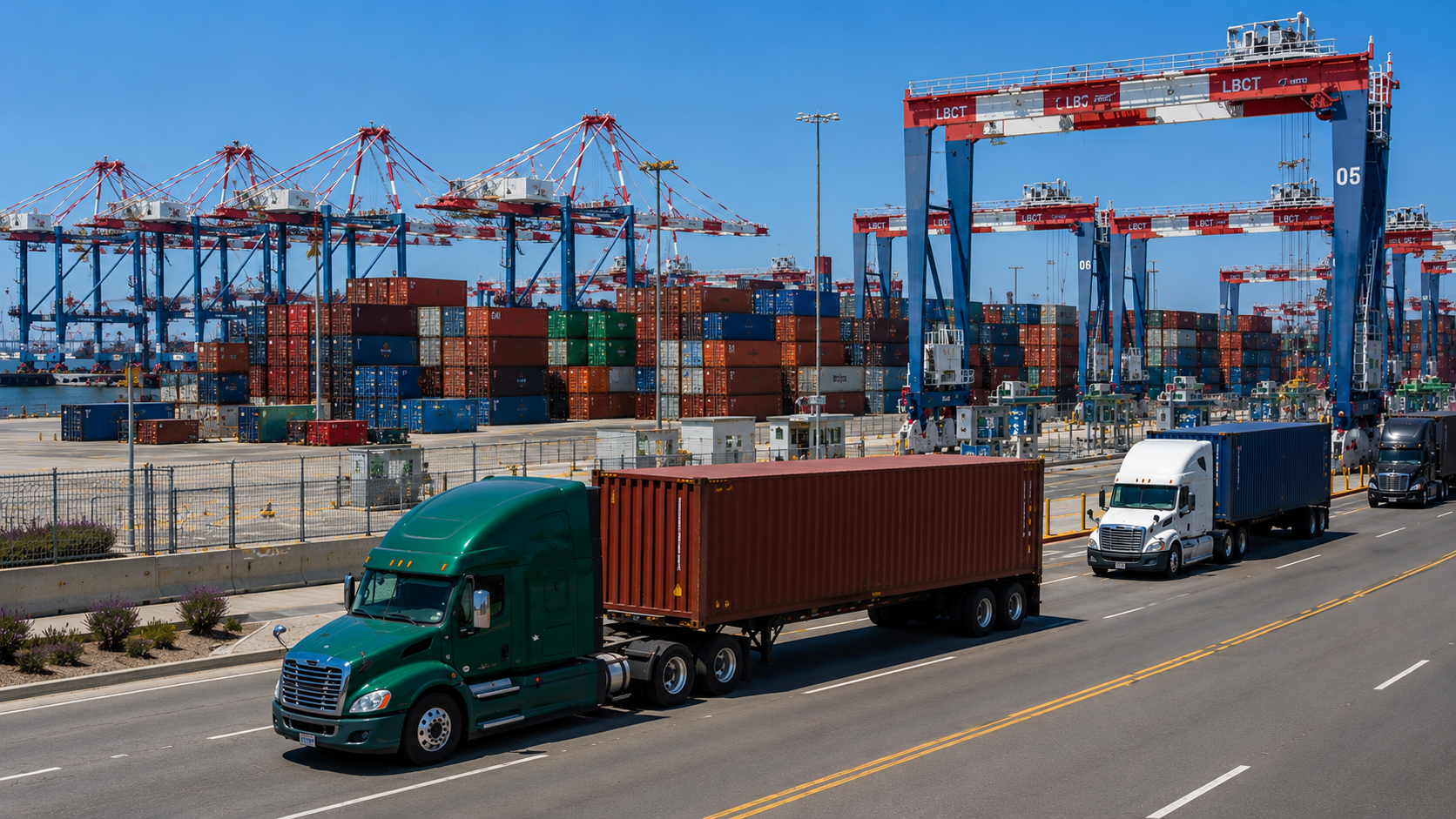
Import container delivery involves vessel discharge, required shipment releases, terminal availability checks, drayage pickup, warehouse delivery and unloading, followed by empty-container return. For Port of Long Beach shipments, coordinate the Last Free Day, any required appointments, chassis and receiving schedule before dispatch.
Overview
Getting an import container from the Port of Long Beach to a warehouse in Southern California involves several steps. The container must be discharged from the vessel, cleared for release, made available by the terminal, picked up by a drayage carrier, delivered, unloaded, and returned empty.
Understanding this process can help importers, freight forwarders, and logistics teams plan ahead and reduce the risk of delays, demurrage, detention, and other additional charges.
ITZON TRANSPORT provides Port of Long Beach drayage and container delivery throughout Southern California, coordinating the trucking portion from terminal pickup through empty return.
Step 1: Vessel Arrival & Container Discharge
The process begins when the vessel arrives at the Port of Long Beach and the container is discharged into the marine terminal.
A vessel's estimated arrival time can change because of weather, port congestion, berth availability, or schedule adjustments. Even after the vessel arrives, it may take additional time before a specific container is discharged and available for pickup.
Importers should monitor the shipment before arrival so customs clearance and delivery arrangements can be prepared in advance.
Step 2: Customs & Cargo Release
Before an import container can leave the terminal, the required releases must be in place.
Your customs broker typically handles the import entry and works with U.S. Customs and Border Protection (CBP). Containers may also be subject to holds or examinations that delay pickup.
In addition to customs clearance, the ocean carrier must release the cargo and any applicable terminal requirements must be satisfied.
Preparing documentation before vessel arrival can help prevent avoidable delays once the container reaches Long Beach.
Step 3: Container Availability & Last Free Day
After discharge and once the required releases and terminal conditions are satisfied, the container can become available for pickup.
This is an important point in the process because the drayage carrier needs enough time to secure an appointment and retrieve the container before its Last Free Day (LFD).
Don't assume that vessel arrival, container discharge, availability, and LFD are the same thing. Always verify the actual status and applicable free-time information for the shipment.
Delays beyond the allowed free time can result in demurrage or other charges. See our guide on how to avoid container demurrage and per diem charges for more detail.
Step 4: Drayage Pickup
Once the container is available and properly released, the drayage carrier coordinates the terminal pickup.
Depending on the terminal and shipment, this may include:
- Checking container and release status
- Securing a terminal appointment when required
- Coordinating chassis availability
- Dispatching a qualified port driver
- Completing terminal gate procedures
- Retrieving the loaded container
Terminal congestion, appointment availability, equipment issues, or operational delays can sometimes affect pickup timing.
ITZON TRANSPORT coordinates the drayage process for shipments moving through the Port of Long Beach, from planning the pickup through dispatch and delivery. For a detailed breakdown, see Port of Long Beach Container Pickup: What to Expect.
Step 5: Delivery to the Warehouse
After leaving the port, the container is transported to the customer's warehouse, distribution center, manufacturing facility, or other delivery location.
Delivery timing depends on the destination, traffic, terminal pickup time, and the receiving facility's schedule.
Before delivery, make sure the receiving location is prepared for the container. Confirm the delivery appointment, dock or unloading area, operating hours, and whether the facility can unload within the scheduled time.
Good coordination between the customer, warehouse, and drayage carrier helps prevent unnecessary waiting and additional trucking or equipment charges.
Step 6: Empty Container Return
After unloading, the empty ocean container must be returned to an approved return location within the applicable free-time period.
Return instructions can change, so the correct return location and receiving status should be verified before dispatching the empty container.
Returning the equipment promptly helps reduce the risk of container detention or per diem charges, as well as additional chassis charges when applicable. ITZON TRANSPORT coordinates the empty return as part of the container delivery process.
Southern California Container Delivery
ITZON TRANSPORT provides Port of Long Beach container transportation to major Southern California logistics markets, including:
- Los Angeles County — Commerce, Vernon, City of Industry and surrounding areas
- Long Beach & South Bay — Long Beach, Carson, Compton, Torrance and nearby cities
- San Gabriel Valley — El Monte, Irwindale, Azusa, Pomona and surrounding areas
- Inland Empire — Ontario, Fontana, Riverside, San Bernardino and nearby logistics centers
- Orange County — Anaheim, Fullerton, Santa Ana, Irvine and surrounding areas
See our full Service Areas page for complete coverage details.
Need help moving an import container from the Port of Long Beach?
View our Import Container Drayage service or request a quote.