
Why Was My Loaded Export Container Rejected at the Terminal?
This guide covers the loaded export return to a Port of Long Beach marine terminal — not cargo rejected after arriving at its destination, import customs holds, or rejection at the shipper's loading facility. If the driver attempted to return a loaded export container to the terminal and was turned away, this guide explains the most common causes and what to verify before another attempt.
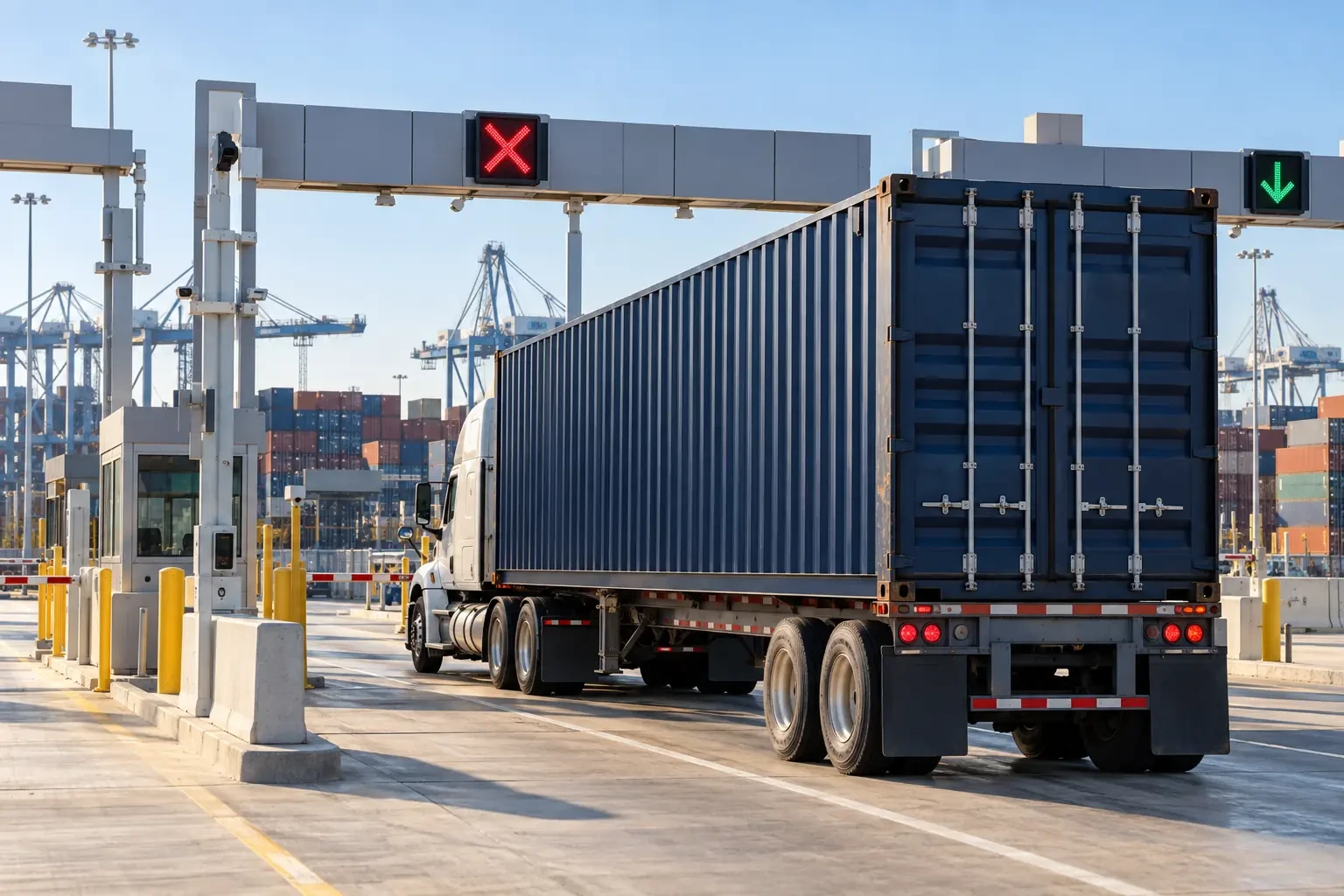
The short answer
A loaded export container can be rejected at a Port of Long Beach marine terminal for many reasons — the receiving window is not open, the cargo cutoff has passed, the booking is inactive or was amended, the container is at the wrong terminal, required documentation or VGM is not reflected in the system, or an appointment or transaction requirement was not met.
"The terminal rejected the container" describes the result, not the cause. The exact rejection message, gate ticket, or portal status is needed to identify what went wrong and which party must correct it.
All applicable booking, terminal, documentation, and appointment requirements must be reconfirmed before another return attempt is dispatched.
What "terminal rejection" means
A terminal rejection occurs when a driver attempts to return a loaded export container to a marine terminal and the gate does not accept the move. The driver may receive a rejection message on a gate kiosk, a trouble slip, a portal status update, or a verbal instruction from terminal staff to leave the terminal.
The rejection message or code is the most useful piece of information available at that moment. Different terminals use different systems and terminology. The message may reference the booking, the container, the appointment, the transaction, the receiving status, or a combination. Collecting the exact wording — rather than a summary — is the fastest path to identifying the cause.
A rejection is a status, not the root cause
Knowing that the container was rejected does not identify what needs to be corrected or who must correct it. The responsible party — ocean carrier, freight forwarder, NVOCC, booking party, shipper, or trucking company — depends entirely on the cause.
When a rejection occurs, the driver should collect as much of the following as the terminal provides:
Not every terminal provides all of these items. Collect what is available.
Common reasons a loaded export container is rejected
Requirements vary by ocean carrier, marine terminal, booking, vessel, and shipment. The following are commonly reported causes — not a universal list.
ERD or receiving window not open
The terminal is not yet accepting the container for the booked sailing. The Earliest Receiving Date may not have opened, or the terminal may not have begun receiving for that booking even after the ERD date.
Cargo cutoff has passed
The final receiving deadline for the intended sailing has passed. The booking may need to be rolled or amended by the responsible party before another return can be attempted.
Terminal not receiving the booking
The terminal may not be actively receiving the specific booking, vessel, or voyage at the time of the attempted return, even if the ERD is open and the cutoff has not passed.
Booking amended, rolled, or inactive
The booking may have been changed to a different vessel, voyage, or terminal after the trucking company received its instructions. An inactive or canceled booking will not be accepted at the gate.
Wrong marine terminal or return location
The container is being returned to a terminal that does not match the current booking instructions. Export return locations can change when a booking is amended.
Booking, container, or seal mismatch
The booking number, container number, seal number, container size, or container type used in the gate transaction does not match what the terminal system expects for the booking.
VGM or documentation not reflected in system
Required export documentation or the Verified Gross Mass has not been filed or is not yet reflected in the terminal or carrier system at the time of the attempted return.
Appointment or transaction missing or incorrect
Some terminals require a gate appointment or specific transaction authorization for loaded export returns. A missing, expired, or incorrectly entered appointment or transaction may result in rejection.
Container or equipment condition concern
A visible safety or condition issue with the container, chassis, or equipment may result in the terminal declining the move. Applicable requirements must be confirmed with the responsible terminal, carrier, shipper, or equipment provider.
Terminal receiving status changed after dispatch
Terminal receiving status can change between the time the truck is dispatched and the time it arrives at the gate. A status that was confirmed before departure may no longer be current upon arrival.
Troubleshooting by rejection type
The party that must act depends on the cause. These are commonly involved parties — not a universal assignment of legal responsibility.
ERD not open
Check current ERD and terminal receiving status through the ocean carrier, booking party, or terminal information system before redispatch.
Cargo cutoff passed
Ocean carrier or booking party must confirm whether the booking was rolled, amended, or otherwise changed and provide updated ERD and cutoff dates.
Booking not found or inactive
Ocean carrier, freight forwarder, NVOCC, or booking party must confirm booking status and provide current instructions.
Wrong terminal or return location
Confirm the current assigned marine terminal through the latest ocean-carrier booking instructions.
VGM or documentation incomplete
Shipper, freight forwarder, booking party, or responsible filing party must confirm that VGM and required documentation are filed and reflected in the appropriate system.
Appointment or transaction mismatch
Trucking company and/or terminal transaction system, depending on the error. Confirm the correct appointment or transaction details before another attempt.
Container or seal mismatch
Shipper, booking party, ocean carrier, or responsible documentation party must confirm the correct container number, seal number, size, and type.
Container or equipment condition
Responsible equipment provider, shipper, ocean carrier, or terminal, depending on the condition identified. Do not attempt to return a container with an unresolved safety or condition concern.
What to verify before another return attempt
Previously confirmed information can change between attempts. All of the following should be reconfirmed through the responsible party before redispatch — not assumed to be the same as before the rejection.
Preventing a repeat rejection
Most terminal rejections on export moves result from information that changed after the original booking confirmation — or information that was never confirmed in the first place. The ERD vs. cargo cutoff guide covers the receiving-window verification sequence in detail.
Coordinating Port of Long Beach export container transportation
ITZON TRANSPORT coordinates export container drayage between authorized empty-pickup locations, Southern California commercial loading facilities, and Port of Long Beach marine terminals. For a full walkthrough of the export move sequence, see the guide on the export container drayage process.
ITZON TRANSPORT coordinates trucking based on information supplied by the customer, freight forwarder, ocean carrier, booking party, and terminal systems. ITZON TRANSPORT does not control vessel schedules, ERDs, cargo cutoffs, terminal receiving rules, booking changes, VGM filing, or shipping documentation. Shipment-specific requirements must be confirmed with the responsible ocean carrier, marine terminal, freight forwarder, NVOCC, booking party, shipper, or other responsible party before dispatch.
For freight forwarders and third-party logistics providers coordinating multiple export shipments, see the guide on drayage for freight forwarders and 3PLs. Service areas include warehouses, manufacturing facilities, and commercial loading locations throughout the region — see the service areas page for coverage details.
Request an Export Drayage QuoteFrequently asked questions
Ready to Move a Container?
Get a quote for Port of Long Beach drayage, Southern California delivery, or export container transportation.