
What Is a Customs Exam? CES, VACIS & Port Exam Holds Explained
When a container is selected for a customs examination at the Port of Long Beach, the normal pickup and delivery timeline can change significantly. This guide explains what a customs exam is, the difference between a customs hold and a customs exam, what VACIS scans and Centralized Examination Stations (CES) mean in practice, and how an examination can affect your container's availability for pickup.
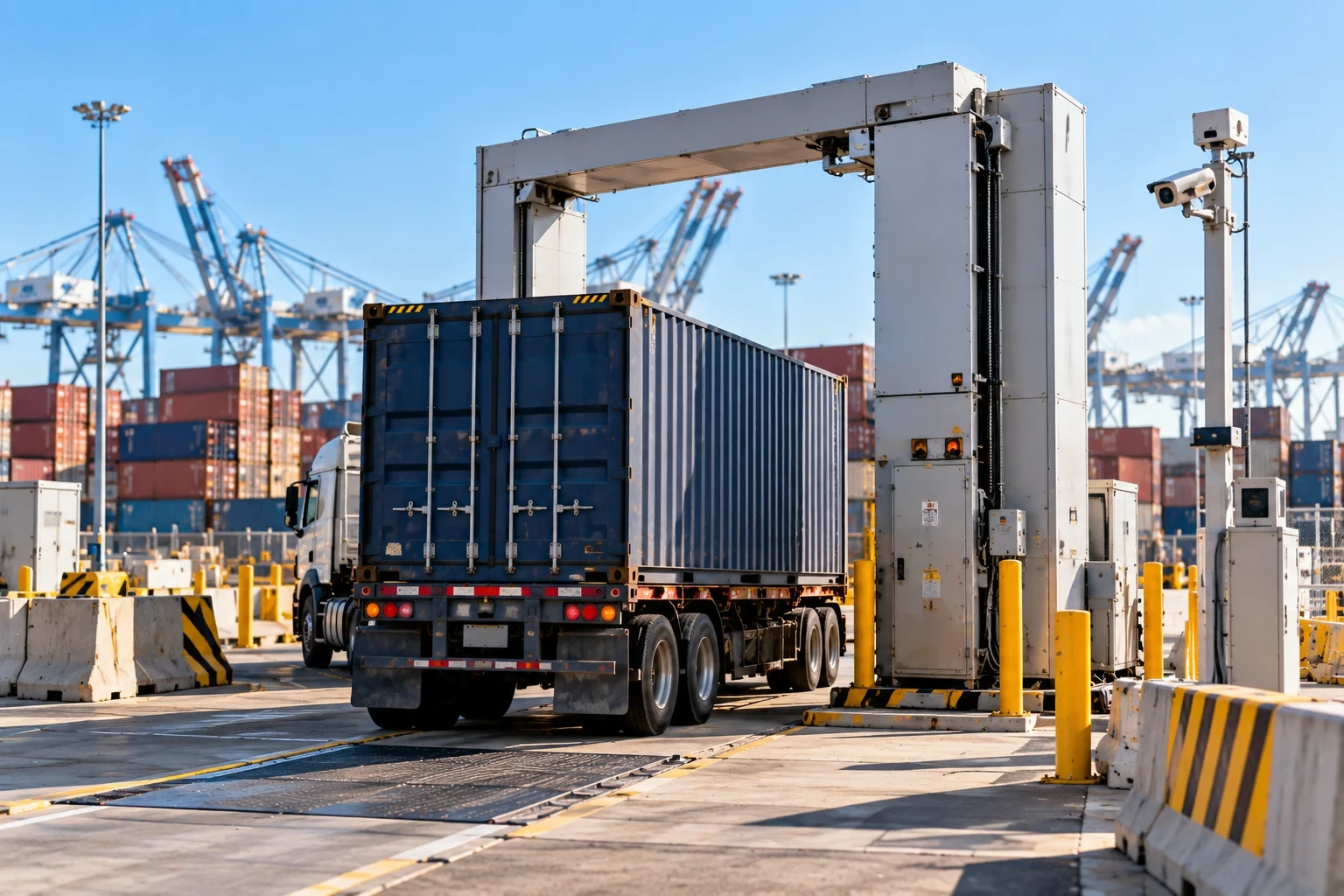
What Is a Customs Exam?
A customs examination is an inspection of imported cargo conducted by U.S. Customs and Border Protection (CBP). CBP has broad authority under federal law to examine any shipment entering the United States, and it uses a combination of targeting systems, risk assessment, and random selection to determine which containers to examine.
Not every imported container receives a physical examination. Many shipments clear customs without a physical inspection. When CBP does select a container for examination, the type and scope of that examination can range from a non-intrusive scan to a full physical inspection at an off-terminal facility.
For importers moving containers through the Port of Long Beach, a customs examination hold means the container cannot be released for normal terminal pickup until CBP completes its review and issues the applicable release. Your customs broker is the primary point of contact for CBP status updates and instructions during this process.
What Is the Difference Between a Customs Hold and a Customs Exam?
These two terms are often used interchangeably in the industry, but they describe different things.
A customs hold is a general term for a situation in which CBP or another applicable government agency has paused the release of a shipment while it reviews the entry, requests additional information, or requires some other action before the shipment can proceed. A hold can be placed for a variety of reasons, including documentation issues, compliance questions, or examination requirements.
A customs exam is a specific type of action — an inspection or review of the cargo itself ordered by CBP. An examination may be triggered by a hold, but not every hold results in a physical examination of the container. Some holds are resolved through document review alone.
It is also important to understand that customs release is not the same as terminal availability. Even after CBP releases a shipment, the container may not be immediately available for pickup at the terminal. Ocean carrier release, terminal availability, appointment scheduling, applicable charges, and other requirements may still need to be satisfied before a drayage carrier can pick up the container.
What Is a VACIS Exam?
"VACIS exam" is a term commonly used in the shipping and logistics industry to describe a non-intrusive container scan. CBP uses non-intrusive inspection (NII) technology — including large-scale imaging systems — to screen containers without physically opening them. These systems can produce images of a container's contents that CBP officers review for anomalies.
The term "VACIS" (Vehicle and Cargo Inspection System) has become widely used in the trade as shorthand for this type of scan. It is worth noting that not every non-intrusive inspection system in use at U.S. ports is specifically VACIS-branded equipment — CBP uses various NII technologies. When your customs broker or terminal contact refers to a "VACIS exam," they are generally describing a non-intrusive imaging scan.
A non-intrusive scan is typically less disruptive to the container's timeline than a physical examination, but the container remains on hold until CBP reviews the scan results and determines whether additional action is required.
What Is a Physical or Tailgate Exam?
A physical examination involves CBP officers directly inspecting the cargo inside the container. The term "tailgate exam" is widely used in the shipping industry to describe a physical inspection conducted at the container's doors — typically at the marine terminal — where CBP officers open the container doors and inspect the cargo without fully unloading the container.
"Tailgate exam" is primarily industry and trade terminology rather than a formal CBP classification. CBP's own documentation refers to physical examinations in broader terms. When your customs broker or terminal contact uses the term "tailgate exam," they are generally describing a door-opening physical inspection at the terminal.
A physical examination at the terminal is generally less involved than an intensive examination requiring transport to a Centralized Examination Station, but it still requires CBP to complete its review before the container can be released.
What Is an Intensive Customs Exam?
An intensive examination is a more thorough physical inspection of a container's contents. It typically involves unloading some or all of the cargo so that CBP officers can examine it more closely. Intensive examinations are generally conducted at a Centralized Examination Station (CES) rather than at the marine terminal.
Because intensive examinations require transporting the container to a CES and unloading the cargo, they tend to take longer and involve additional costs compared to a non-intrusive scan or a door-opening inspection at the terminal. The specific duration and costs associated with an intensive examination can vary depending on the cargo, the examination requirements, the CES facility, and CBP processing.
Do not rely on generic timelines or cost estimates for intensive examinations. Your customs broker is the appropriate contact for current status and guidance specific to your shipment.
What Is a Centralized Examination Station (CES)?
According to CBP, a Centralized Examination Station (CES) is a privately operated facility where merchandise is presented to CBP for physical examination. CES facilities exist to provide a location where CBP can conduct physical examinations that require more space, equipment, or handling than is practical at the marine terminal.
CBP designates CES operators for specific ports. For the Los Angeles/Long Beach Seaport, CBP announced a final CES operator selection effective June 1, 2026. Importers and customs brokers should verify current CES operator information directly with CBP or through official CBP communications for the most up-to-date details.
When a container is sent to a CES, the importer typically incurs costs associated with the examination process, which may include CES handling fees, transportation, unloading, reloading, and storage. These costs are generally the importer's responsibility, though the specific charges depend on the examination type and the applicable CES fee schedule.
What Happens When a Port of Long Beach Container Is Sent for an Exam?
The specific sequence of events can vary depending on the examination type and CBP's requirements, but the general process for an import container at the Port of Long Beach typically involves the following:
- CBP selects or holds the shipment for examination based on targeting, risk assessment, or other criteria.
- The importer's customs broker receives applicable status notifications and instructions from CBP through the entry system.
- CBP determines the type of examination required — non-intrusive scan, physical inspection at the terminal, or intensive examination at a CES.
- If the examination requires transport to a CES, the container must be moved from the marine terminal to the CES facility under applicable CBP and CES procedures.
- CBP conducts the applicable examination and reviews the results.
- CBP determines whether the shipment can be released or whether additional action is required.
- After CBP resolves the examination and issues the applicable release, the container must still satisfy all remaining terminal availability requirements before a drayage carrier can pick it up.
Not every examination follows this exact sequence. Your customs broker is the appropriate contact for shipment-specific status and instructions throughout the examination process.
Who Moves the Container to the CES?
This is an important question, and the answer is not simply "your normal drayage carrier."
For applicable examination transfers at the Los Angeles/Long Beach Seaport, CBP has issued guidance concerning the controlled drayage of certain shipments selected for examination — including Merchandise Enforcement Team (MET) and Agriculture/AQI examinations. Under applicable CBP procedures, certain examination transfers may use controlled, assigned, or otherwise authorized transportation rather than allowing the importer to freely select any drayage carrier for the terminal-to-CES move.
ITZON TRANSPORT does not automatically perform terminal-to-CES examination transfers. If your container is selected for an examination requiring transport to a CES, you should coordinate with your customs broker and follow the current CBP and CES instructions applicable to your shipment. Do not assume that your normal drayage carrier can or will perform the examination transfer.
For current, shipment-specific guidance on examination transfers at the Port of Long Beach, contact your licensed customs broker and verify the applicable CBP and CES procedures in effect at the time of your examination.
Can ITZON TRANSPORT Pick Up a Container While It Is on a Customs Exam Hold?
No. ITZON TRANSPORT cannot perform your normal container delivery while the container remains unavailable for normal terminal pickup due to a customs examination hold.
Once CBP resolves the examination hold and the container is appropriately released and available for normal terminal pickup, ITZON TRANSPORT dispatch can coordinate the Port of Long Beach drayage move to your Southern California delivery location. That coordination is subject to normal requirements, including:
- Terminal availability and appointment scheduling
- Ocean carrier release
- Applicable terminal charges
- Chassis and equipment coordination
- Delivery requirements at the consignee location
CBP release alone does not mean the container is immediately ready for pickup. See the section below on what happens after CBP releases the container.
To coordinate a drayage move once your container is released and available, request a quote or contact ITZON TRANSPORT dispatch directly.
What Happens After CBP Releases the Container?
CBP customs release is a necessary step, but it does not automatically mean your container is ready for terminal pickup. After CBP issues its release, additional requirements may still need to be satisfied before a drayage carrier can pick up the container at the terminal.
Depending on the shipment, these may include:
- Ocean carrier release — the ocean carrier must release the container, which may require payment of freight charges or other carrier requirements
- Terminal availability — the terminal must show the container as available for pickup in its system
- Appointment scheduling — most Port of Long Beach terminals require a truck appointment before a drayage carrier can enter to pick up a container
- Applicable charges — terminal fees, demurrage, or other charges may need to be resolved before the container can be released
- Chassis and equipment coordination — appropriate chassis must be available for the container size and type
- Terminal operating conditions — terminal gate hours, congestion, and operational conditions affect pickup timing
For a broader overview of the factors that can affect container availability after vessel arrival, see our guide on why a container may not be available for pickup and our Port of Long Beach container pickup guide.
Can a Customs Exam Affect Last Free Day or Demurrage?
Yes — a customs examination can result in additional time at the terminal or CES, which may lead to demurrage, detention, or storage charges depending on the applicable free-time rules and how long the examination process takes.
It is important to understand what a customs exam does not automatically do:
- A customs exam does not automatically extend your Last Free Day
- A customs exam does not automatically stop demurrage from accruing
- A customs exam does not automatically pause free time at the terminal
- Examination charges do not automatically excuse or offset demurrage obligations
Some ocean carriers and terminals have specific provisions related to customs holds and free time, but these vary by carrier, terminal, and contract. Importers should verify the applicable rules with their ocean carrier and terminal directly.
While your container is under examination, monitor your Last Free Day closely and stay in contact with your customs broker for status updates. For more on how demurrage and detention charges work, see our guide on avoiding container demurrage.
What Does a Customs Exam Cost?
The costs associated with a customs examination vary depending on the type of examination, the cargo, the CES facility, the handling required, and the duration of the process. There is no single universal cost that applies to every examination.
Potential costs that may arise from a customs examination include, where applicable:
- CES handling fees — charged by the CES facility for receiving, handling, and presenting the cargo to CBP
- Examination-related transportation — costs associated with moving the container from the marine terminal to the CES
- Unloading and reloading — labor and equipment costs if the cargo must be unloaded for inspection and reloaded afterward
- Storage — storage charges at the CES if the container or cargo remains at the facility during or after the examination
- Terminal charges — demurrage or other terminal fees that may accrue while the container is held
- Chassis-related charges — chassis fees that may continue to accrue during the examination period
- Demurrage or detention — where applicable, based on the carrier's and terminal's free-time rules
Not every cost listed above applies to every examination. The specific charges depend on the examination type, the CES fee schedule, and the circumstances of the shipment. Your customs broker can provide guidance on the costs applicable to your specific examination.
Frequently Asked Questions
What does it mean when my container is on a customs exam hold?
A customs exam hold means U.S. Customs and Border Protection (CBP) has placed a hold on your shipment pending an examination or review. The container cannot be released for normal terminal pickup until CBP resolves the hold. Your customs broker will receive applicable status updates and instructions from CBP.
What is a VACIS exam?
"VACIS exam" is commonly used in the shipping and logistics industry to describe a non-intrusive container scan using imaging technology. CBP uses non-intrusive inspection (NII) equipment to screen containers without physically opening them. The term "VACIS" is widely used in the industry as shorthand for this type of scan, though not every non-intrusive inspection system uses VACIS-branded equipment specifically.
What is a Centralized Examination Station (CES)?
A Centralized Examination Station (CES) is a privately operated facility where merchandise is presented to CBP for physical examination. When CBP requires a physical examination that cannot be performed at the marine terminal, the container may be transported to a CES. CBP designates CES operators for specific ports, including the Los Angeles/Long Beach Seaport.
Can my drayage carrier pick up my container while it is on a customs hold?
No. ITZON TRANSPORT cannot perform your normal container delivery while the container remains unavailable for normal terminal pickup due to a customs examination hold. Once CBP resolves the hold and the container is appropriately released and available for normal terminal pickup, ITZON TRANSPORT dispatch can coordinate the drayage move subject to normal terminal, appointment, carrier release, chassis, and delivery requirements.
Does CBP release mean my container is ready for pickup at the terminal?
Not necessarily. CBP customs release is one requirement, but it does not automatically mean the container is immediately available for terminal pickup. Depending on the shipment, additional requirements may still include ocean carrier release, terminal availability, appointment scheduling, applicable charges, chassis coordination, and terminal operating conditions.
Can a customs exam cause demurrage or other storage-related charges?
Yes, a customs examination can result in additional time at the terminal or CES, which may lead to demurrage, detention, or storage charges depending on the applicable free-time rules and the duration of the examination process. A customs exam does not automatically stop or extend free time. Importers should monitor Last Free Day and verify applicable rules with their ocean carrier and terminal while the container is under examination.
Sources
Related Guides
Why a Container May Not Be Available for Pickup
Other reasons a container may not be ready for terminal pickup after vessel arrival.
Port of Long Beach Container Pickup Guide
What to expect from releases and Last Free Day through terminal appointments and empty return.
What Is Last Free Day (LFD)?
What Last Free Day means, why it matters, and how it relates to demurrage and pickup scheduling.
How to Avoid Container Demurrage
How demurrage, detention, and chassis charges work — and ways to reduce the risk of additional costs.
Need Help Coordinating a Port of Long Beach Container Pickup?
Once your container is appropriately released and available for normal terminal pickup, ITZON TRANSPORT can coordinate container drayage from the Port of Long Beach to commercial destinations throughout Southern California. ITZON TRANSPORT does not clear customs holds or conduct CBP examinations — contact your licensed customs broker for examination-related guidance.
Request a Drayage Quote